
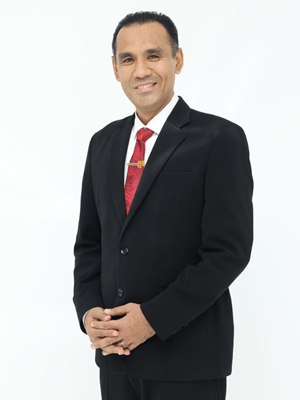
Prof. Dr. Mohamad Fazli Sabri
International Research Fellow

Professor Dr. Mohamad Fazli Bin Sabri was born in Lenggong, Perak. He obtained his Bachelor of Science (Human Development) in 1999 and Master of Science (Consumer Science) in 2002 from Universiti Putra Malaysia (UPM). He later pursued his Doctor of Philosophy (Ph.D.) in Human Development and Family Studies with a specialization in Family Finance at Iowa State University, USA, graduating in 2011. During his convocation, he was awarded the Graduate College Research Excellence Award.
He began his academic career at Universiti Putra Malaysia as a tutor in 2000. His career progressed from Senior Lecturer (2003–2015) to Associate Professor (2015–2020), and currently, he serves as a Professor at the Faculty of Human Ecology. His field of expertise is Personal Financial Planning, and he has held several key administrative positions including Head of Department (2012–2018), Deputy Dean (2018–2021), and Dean of the Faculty of Human Ecology (2021–present).
Professor Fazli is a Certified Financial Planner (CFP) recognized by the Financial Planning Association of Malaysia (FPAM) since 2014 and a Shariah Registered Financial Planner (RFP Shariah) certified by the Malaysian Financial Planning Council (MFPC) since 2015. He also holds professional and technical qualifications such as Certified HRDF Trainer (PSMB) and an Advanced Malaysian Skills Diploma in Financial Planning (Level 5). These credentials reflect his deep expertise in the field of financial advisory and planning services.
In teaching, he covers a range of undergraduate courses including Household Financial Management, Consumer Credit and Debt Management, Personal Finance and Productivity, Psychology of Money, Consumer and Financial Markets, and Human Capital and Economics. At the postgraduate level, he teaches Theories and Management of Financial Planning Organizations and Credit and Debt Management. To date, he has successfully supervised 19 Ph.D. and 14 Master’s students.
His research interests encompass financial literacy, financial technology (FinTech), financial well-being, financial vulnerability, and debt management. He has led 37 research projects as principal investigator with a total grant value of RM1,988,625, secured from various national and international funding bodies. Additionally, he has headed 19 consultancy projects worth RM501,068.26, commissioned by organizations such as Bank Negara Malaysia, Tenaga Cable Industries Sdn. Bhd. (a subsidiary of TNB), the Construction Industry Development Board (CIDB), the Credit Counselling and Debt Management Agency (AKPK), the Malaysian Consumer and Family Economics Association (MACFEA), and the Ministry of Domestic Trade and Cost of Living (KPDN).
His academic influence and research impact are evident through his citation indices: SCOPUS H-index of 24, Web of Science (WOS) H-index of 16, and Google Scholar H-index of 41. He has published over 135 refereed journal articles indexed in WOS, Scopus, and ERA, more than 100 non-indexed journal articles, 23 books, and 28 book chapters published by both local and international publishers.
According to SCOPUS analytics, he ranks first globally in financial behavior, fourth in financial well-being, fifth in financial socialization, and tenth in financial literacy. Google Scholar data also position him as the top author globally in financial well-being and financial vulnerability.
At the national level, Professor Fazli has served as an Expert Panel Member for the Ministry of Housing and Local Government, Advisory Board Member of the Islamic Training Institute of Malaysia (ILIM) under JAKIM, Council Member of Islamic Studies Deans, Curriculum Committee Member for Early Childhood Education under the Ministry of Education, Think Tank Member for the Institute for Youth Research (IYRES) and Institut Darul Ridzuan (IDR). He is also a Member of the Executive Committee for the National Dakwah Council’s Intellectual Discourse Series.
Within the financial planning and education industry, he is an MFPC Fellow, Vice President (Research and Publication) of MFPC (2019–2027), Editor-in-Chief of the Journal of Wealth Management and Financial Planning and Financial First Magazine, and Deputy Chairman of the MFPC Ethics and Compliance Board (2024–2025). He previously served as Executive Committee Member of MACFEA (2012–2020), Financial Literacy Expert for Spark Capital Development Berhad (2024–2026), and Committee Member of the UNESCO Entrepreneurship Education Network (EE Net) Malaysia (2024–2027).
He is frequently invited as a keynote speaker and distinguished presenter at both local and international conferences, including in Vietnam, Indonesia, Thailand, the Philippines, Japan, South Korea, Turkey, Bangladesh, India, China, and South Africa, sponsored by organizations such as the Asian Development Bank Institute (ADBI) and Child and Youth Finance International (CYFI). He has also chaired conference sessions and served as discussant, demonstrating his academic leadership and international recognition.
At the international level, he is the Vice President of the Asian Association for Consumer Interest and Marketing (AACIM), Board Member of the International Academy of Financial Consumers (IAFICO), Board Member of the Asia-Pacific Risk and Insurance Association (APRIA), and Academic Advisory Board Member of dacadoo AG, Switzerland. His global influence is further strengthened through his role as Executive Council Member and Country President (Malaysia) of the Scholars Academic and Scientific Society.
Academically, he has been appointed Visiting Professor at the Nottingham University Business School, United Kingdom, the Center for Fintech and Banking, Universitas Sebelas Maret (UNS), Surakarta, and Institut Sosial dan Manajemen STIAMI, Jakarta. He is also an Adjunct Professor at Institut Pertanian Bogor (IPB University) (2022–2027) and the Department of Management, Universitas Airlangga, Indonesia. These appointments underscore his scholarly distinction and commitment to strengthening international collaboration, knowledge exchange, and regional academic capacity building.
Professor Fazli is an active member of several professional associations at both national and international levels, including MACFEA, the Malaysian Social Science Association, the International Federation for Home Economics, the International Society for Development and Sustainability, and the American Association of International Researchers.
He has conducted more than 100 training sessions and lectures for various agencies including the Prime Minister’s Department, Employees Provident Fund (EPF), Labuan Corporation, Bank Muamalat Malaysia Berhad, TEKUN Nasional, INTAN, Lembaga Zakat Selangor, CUEPACS, and KPJ Tawakal Hospital.
Throughout his distinguished career, he has received 39 prestigious awards—22 international and 17 national—through innovation platforms such as the World Inventor Award Festival (Korea), International Invention Innovation Competition (iCAN, Canada), ITEX, and Malaysian Technology Expo (MTE). His accolades include the WIPO Medal for Creativity, Invention for Children Order of Merit, Best Innovation Award by MyIPO, and the Gold Medal of the National Intellectual Property Award (2015) for his commercialized product “Smart Money Kit: Bright Kids Smart Money”, which holds eight copyrights and two trademarks.
In 2022, he received the Vice-Chancellor’s Fellowship Award (Best Researcher in Social Sciences) from Universiti Putra Malaysia. Beyond academia, he actively contributes to community development through financial education programs such as Program Bijak Wang with the Ministry of Rural and Regional Development, PTPTN, Perbadanan Putrajaya, National Council of Welfare and Social Development (MAKPEM), Lembaga Zakat Selangor, and KRT Taman Sri Serdang. He also serves as an expert assessor and reviewer for numerous public and private universities, evaluating programs, promotions, theses, and serving as a guest lecturer and financial expert.
Known as an active media personality, Professor Fazli has made over 495 appearances on radio, television, newspapers, and magazines, including Radio IKIM, Bernama Radio, KLfm, TV3, Astro Awani, RTM, Berita Harian, The Star, and Utusan Malaysia. In recognition of his media contributions, he received the UPM Media Visibility Award for both 2023 and 2024.
Publications
- Mahrina, M.S., Haseeb, M., Bangsawan, S., & Sabri, M.F. (2024). Effects of E-CRM and Green Operational Performance of Hospitals: A Case Study of ASEAN Countries. Operational Research in Engineering Sciences: Theory and Applications, 7(1):1-24.
- Burhan, N.A.S., & Sabri, M.F., & Rindermann, H. (2024). Why it can be wise for smart people to listen to their government sometimes: A painful lesson from the international pattern of COVID-19 death rates. Mankind Quarterly, 63(4): 453-47.
- Yusof, R., Mohd. Yusof, M.I., Ab Rahman, F.A., Sabri, M.F., Ariffin, M., & Hadzikadunic, E. (2024). Catalysing Change: Unveiling Tailored Strategies for Localising Sustainable Development Goals in Southeeast Asia. International Journal of Research and Innovation in Social Science, 8(2): 1887-1911.
- Hartono, S., Sabri, M.F., Gumilamg, D.A., Wijekoon, R. (2024). Indonesian and Malaysian Consumers’ Perspectives towards COVID-19 Vaccine Products from China. International Journal of Productivity and Quality Management, 41(2): 177-196
- Hazudin, S.F., Sabri, M.F., Ramli, N., & Burhan, N.A.S. (2023). Development of Antecedent Factors for Malaysian Women’s Entrepreneurial Resilience Framework: A Fuzzy Delphi Method. Journal of Women’s Entrepreneurship and Education, 3:1-27.
- Jamil, A.R., Law, S.H., Sabri, M.F., & Afham, M.K. (2023). Does Financial Literacy Improve Financial Inclusion in Developing Countries? A Nonlineraity and Quantile Regression Analysis. Malaysian Journal of Economic Studies, 60(2):1-26.
- Ahmad Suhaimi, S.S., Sabri, M.F., & Nazuri, N.S. (2023). The Behavioral Dynamics of Malaysian Young Adults’ Financial Vulnerability. International Journal of Academic Research in Business and Social Sciences, 13(16): 434-458
- Nazuri, N.S., Ahmad Suhaimi, S.S., & Sabri, M.F. (2023). The Interactive Effect of Age and Education on Bonding Social Capital towards Empowerment of Urban Agriculture Communities in Klang, Valley, Malaysia. International Journal of Academic Research in Business and Social Sciences, 13 (16): 291-306
- Burhan, N.A.S., Azizul, M.D.A., Sabri, M.F., Wan Jaafar, W.M., Hamsan, H.H., & Baharuddin, N. (2023). Is police force size related to crime rates? Journal of Social, Political and Economic Studies, 47(3-4): 195-210.
- Sabri, M.F., Wahab, R., Mahdzan, N.S., Magli, A.S., Abdul Rahim, H., Suhaimi, S.A.A., & Nazuri, N.S. (2023). An Enigma of Malaysia’s Low-Income Young Adults: Intercession of Financial Behaviour on Financial Well-being and Locus of Control Cohesion. PLOS ONE, July: 1-27.
- Mahrina, M.S., Haseeb, M., Bangsawan, S., Sabri, M.F., & Mohd Daud, N. (2023). Effects of Green Operational Practices and E-CRM on Patient Satisfaction among Indonesian Hospitals: Exploring the Moderating Role of Green Social Influence. Operational Research in Engineering Sciences: Theory and Applications, 6(1): 236-251
- Abdullah, N., Sabri, M.F., Ahmad Suhaimi, S.S., Ithnin, M., & Magli, A.S. (2023). The Moderating Effect of Household Income on the Determinants of Parental Investment on Children. Malaysian Journal of Consumer & Family Economics, 30: 473-500
- Sabri, M.F., Anthony, M., Law, S.H., Abdul Rahim, H., Burhan, N.A.S., & Ithnin, M. (2023). Impact of financial behaviour on financial well-being: Evidence from young adults in Malaysia. Journal of Financial Services Marketing, published online: 22 May 2023
- Zakaria, R., Sabri, M.F., Mohd Satar, N., & Magli, A.S. (2023). The immediate impacts of Covid-19 on low income households: Evidence from Malaysia. Sustainability, 15, 8396: 1-18.
- Mahdzan, N.S., Sabri, M.F., Husniyah, A.R., & Magli, A.S. (2023). Digital financial services usage and subjective financial well-being: Evidence from low-income households in Malaysia. International Journal Bank of Marketing, 41(2):395-427.
- Simanjuntak, M., Nafila, N.L., Yuliati, L.N., Johan, I.R., Najib, M., & Sabri, M.F. Environmental care attitudes and intention to purchase green products: Impact of environmental knowledge, word of mouth and green marketing, Sustainability, 15, 5445, 1-16.
- Yao, P., Sabri, M.F., Osman, S., Zainudin, N., & Li, Y. (2023). Consumer’s continued intention to use online-to-offline (O2O) services in omnichannel retail: Differences between to-shop and to- home models. Sustainability,15. 945, 1-23.
- Burhan, N.A.S., & Sabri, M.F., & Rindermann, H. (2022). Cognitive Ability and Economic Growth: How Much Happiness is Optimal. International Review of Economics, 70:63-100.
- Nawi, H.M., Ahmad, M.Y., Yahaya, M.N., Ariffin, Z.Z, Abdullah, M.N., Ismail, A., Sabri, M.F. (2023). Bibliometric analysis and visualization of research on financial readiness. International Journal of Academic Research in Accounting, Finance and Management Sciences, 13(2): 111-128.
- Ishak, Z.M., Magli, A.S., & Sabri, M.F. (2022). Predictors of retirement security among the Malaysian civil servants. International Journal of Academic Research in Business and Social Sciences, 12(12): 1982-2003.
- Li, Y., Yao, P., Osman, S., Zainudin, N., & Sabri, M.F. (2022). A Thematic Review on Using Food Delivery Services During the Pandemic: Insights for the Post-COVID-19 Era. International Journal of Envirommental Research and Public Health, 19(22):15267
- Hazudin, S.F., Sabri, M.F., Awang Kader, M.A.R, Saripin, M.S., & Ridzuan,M.R. (2022). Social Capital, Entrepreneurial Skiils and Business Performance among Rural Micro-Enterprises in Times of Crisis Knowledge and Performance Management, 6: 75-86.
- Khalishrani, H., Sabri, M.F., Johan, I.R., Burhan, N.A.S., & Mohd.Yusof,A.N. (2022). The Influence of Parental Financial Socialization and Financial Literacy on Financial Behaviour among University Students. International Journal of Economics and Management, 16(3): 351-364.
- Burhan, N.A.S., Keshminder, J.S., Sabri, M.F., Salleh, F., Afthanirhan, A., & Joey, C., (2022). Materialism and Big-Five Personality Traits Shaping Low-Income University Students’ Compulsive Online- Buying Behavior. Pertanika Journal of Social Sciences and Humanities, 30(4): 1931-1953.
- Aw, E.C.X., Chuah, S.H.W., Sabri, M.F., & Chong, H.X. (2022). “We” want apology! Tailoring Service Recovery and Self Construal to Earn Customer Forgiveness. International Journal of Services, Economics and Management, 13(3): 225-242.
- Abd Rahim H., Zakaria, N.F., Magli, A.S., Sabri, M.F., Sahuddin, Z., Othman, M.A. (2022). Mediation effect of debt behaviour on Malaysian employees’ financial strain moderated by job satisfaction, 12(10): 275-293.
- Abdul Rahim, H., Abdul Wahab, A.F., Sabri, M.F., & Othman, M.A. (2022). Malaysian public sector employees’ gold investment intention as a mediator in gold investment behaviour. Malaysian Journal of Consumer and Family Economics, 29:425- 450.
- Wijekoon, R., Sabri, M.F., Ahmad, N., & Abd Rahim, H. (2022). Mediating role of financial behavior between financial factors and economic well-being: Through the lens of the Extended Family Resource Management Model. International Journal of Academic Research in Business and Social Sciences, 12(10): 30-48
- Najib, M., Fahma, F., Suhartanto, D., Sumardi, R.S., & Sabri, M.F. (2022). The role of information quality, trust and anxiety on intention to buy food supplements at the time of Covid-19 outbreak. International Journal of Pharmaceutical and Healthcare Marketing, 16(3): 429-447.
- Mansor, M., Sabri, M.F., Mansur, M., Ithnin, M., Magli, A.S., Abd Rahim, H., Mahdzan, N.S., Othman, M.A., Zakaria, R.H., Satar, N.M., & Janor, H. (2022). Analysing the predictors of financial stress and financial well-being among the bottom 40 percent (B40) households in Malaysia. International Journal of Environmental Research and Public Health, 19(9):12490.
- Sabri, M.F., Said, M.A., Magli, A.S., Pin, T.M., Rizal, H., Thangiah, N., Ithnin, M., Majid, H.A., Ismail, R., Su, T.T., & Abdul Rahim, H. (2022). Exploring the relationships of financial literacy and financial behaviour wih health-realted quality of life (HRQOL) among the low-income working population in Malaysia during the COVID-19 pandemic. International Journal of Envirommental Research and Public Health, 19(9):12520.
- Sabri, M.F., Wahab, R., Mahdzan, N.S., Magli, A.S., & Abd Rahim, H., (2022). Mediating effect of financial behavior on the relationship between perceived financial well-being and its predictors among low-income young adults in Malaysia. Frontiers in Psychology, 13: 1-16.
- Wijekoon, R., & Sabri, M.F., Ahmad, N., & Abdul Rahim, H. (2022). The mediating role technology adoption in the relationship between financial factors and economic well-being in Agricultural context. International Journal of Academic Research in Business and Social Sciences, 12(13): 114-125
- Sabri, M.F., Wijekoon, R., Abd Rahim, H., Burhan, N.A.S., Madon, Z., & Hamsan, H.H. (2022). Financial literacy, financial behavior, self-efficacy and financial health among Malaysian households; The mediating role of money attitudes. International Journal of Academic Research in Business and Social Sciences, 12(13): 89- 97.
- Yao, P., Osman, S., Sabri, M.F., & Zainudin, N. (2022). Consumer behavior in online-to-offline (O20) commerce: A thematic review. Sustainability, 14 (7482): 1-25.
- Sabri, M.F., Wijekoon, R., Burhan, N.A.S., Abdul Rahim, H., Othma, A., & Magli, A.S. (2022). The Antecedents of Financial Health in Malaysia with the Mediating Effect of Financial Vulnerability. Malaysian Journal of Consumer and Family Economics, 28: 100- 129.
- Magli, A.S., Sabri, M.F., Abdul Rahim, H., & Othman, M.A. (2022). Payment Behavior among B40 Households during Covid-19 as a Mediator towards Financial Well-Being. Malaysian Journal of Consumer and Family Economics, 28: 1-32.
- Kok Fei, C., Sabri, M.F., Abdul Rahim, H., & Othman, M.A. (2022). Determinants of Financial Vulnerability among Credit Counseling and Debt Management Customers. Malaysian Journal of Consumer and Family Economics, 28: 33-67.
- Anthony, M., Sabri, M.F., Abdul Rahim, H., & Othman, M.A. (2022). Financial Socialization and Moderation Effect of Gender in the Influence of Financial Behavior on Financial Well-Being among Young Adults. Malaysian Journal of Consumer and Family Economics, 28: 68-99.
- Khalisharani, H., Johan, I.R., & Sabri, M.F. (2022). The Influence of Financial Literacy and Attitudes towards Financial Behavior amongst Undergraduate Students: A Cross Country Evidence. PERTANIKA Journal of Social Sciences and Humanities, 30(2): 449-474.
- Sabri, M.F., Razak, N.F., Aw, E.C.X., & Wijekoon, R. (2022). Going Green in the Workplace: Through the Lens of the Extended Theory of Planned Behavior. PERTANIKA Journal of Social Sciences and Humanities, 30(2): 429-448.
- Ahmad, N.S.S., Sulaiman, N., & Sabri, M.F. (2022). Psychological factors as mediator to food security status and academic performance among university students. International Journal of Envirommental Research and Public Health, 19(9):5535
- Sharifuddin, S.S., Zainudin, N., & Sabri, M.F. (2022). An extended model of Theory of Planned Behavior to predict households’ response to net energy metering program in urban Malaysia. International Journal of Academic Research in Business and Social Sciences, 12(1): 1864-1879.
- Ghazali, M.F., Alwi, S.F.S., Othman, I., & Sabri, M.F., & Aziz, N.N.A. (2022). The relationship between subjective financial knowledge ad financial well-being among emerging adults in Malaysia: Mediating effect of financial behaviour. International Journal of Academic Research in Business and Social Sciences, 12(4): 1263-1284.